
Could inpatient care be avoided when treating bacterial keratitis?
Dr Imran Mohammed and his team are developing a new treatment for bacterial keratitis using synthetic peptides inspired by the body’s natural defences. This approach aims to break down protective bacterial biofilms, making infections easier to treat and potentially reducing the need for hospital admission.
Dr Imran Mohammed
Role: Senior Lecturer in Optometry and Vision Sciences
Institution: Cardiff University
Project name: A biofilm-busting peptide therapy to improve treatment of bacterial keratitis
Project type: Seed Award
Project status: Completed
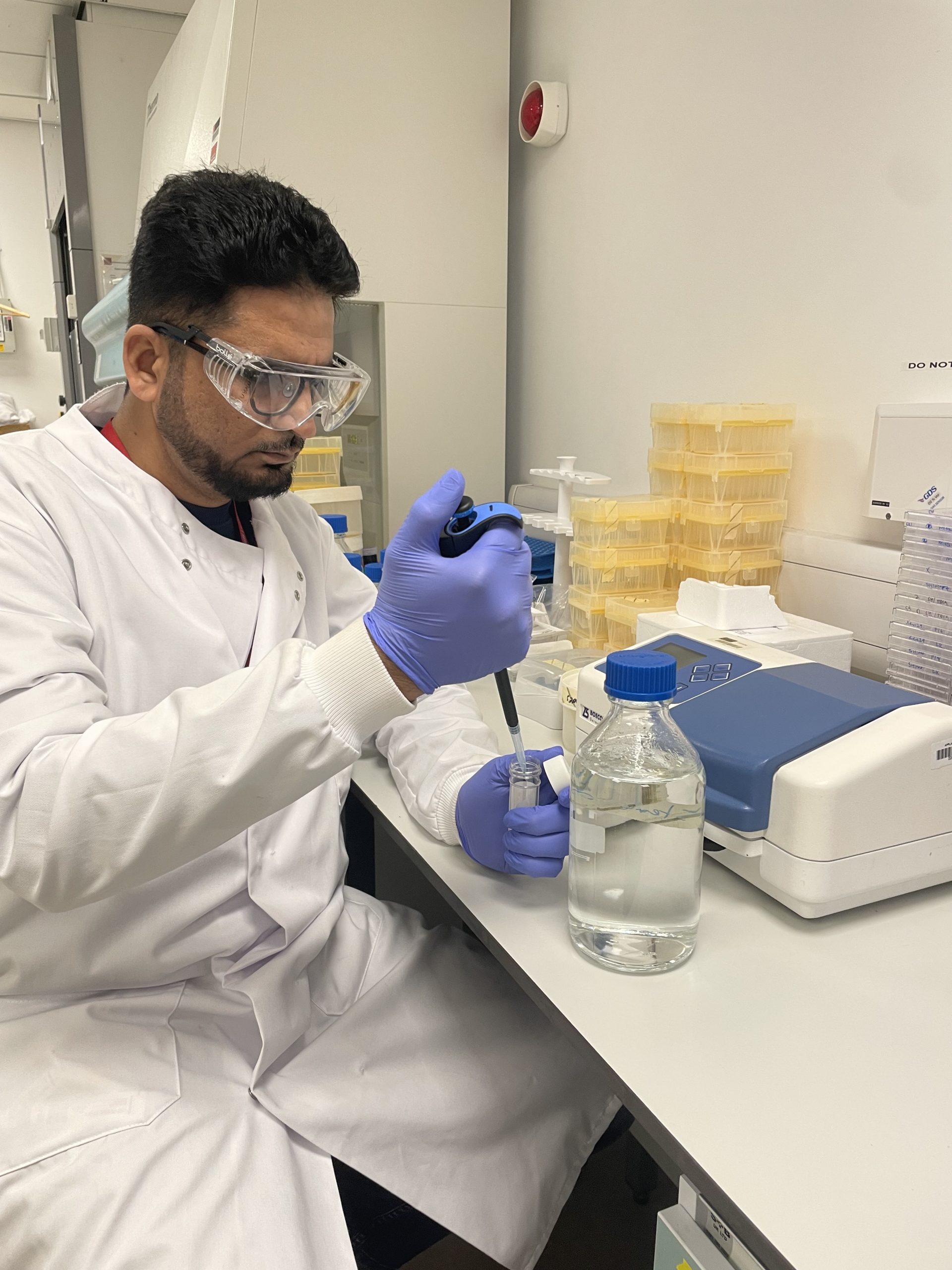
Dr Mohammed’s team is developing a new treatment based on host defence peptides, natural molecules found on the surface of the eye that help fight infection. By creating a synthetic version of a peptide called human cathelicidin, they developed a potential therapy known as SMP16. In early laboratory studies using a corneal infection model, SMP16 was able to penetrate bacterial biofilms and kill bacteria more effectively than the commonly used antibiotic moxifloxacin even at lower concentrations. Dr Mohammed says:
“This indicates that we might be able to reduce not only the amount of a drug required to treat the infection but also the frequency of dosing.”
These findings suggest that treatment could become easier for patients to manage at home, potentially reducing the need for hospital admission altogether.
However, this research is still at an early stage. Further studies are needed to confirm how well this approach works in living tissue and to explore its potential in clinical trials. If successful, this approach could lead to more effective treatments for bacterial keratitis reducing the burden on patients, lowering healthcare costs and helping to prevent sight loss. Dr Mohammed adds:
“Without this funding, we wouldn’t have known whether this peptide was able to work in a tissue environment. It means we now have the data we need to unlock larger funding grants for advanced animal studies and then, potentially, in human clinical trials.”