

Is there a connection between eye movement and myopia progressing in children?
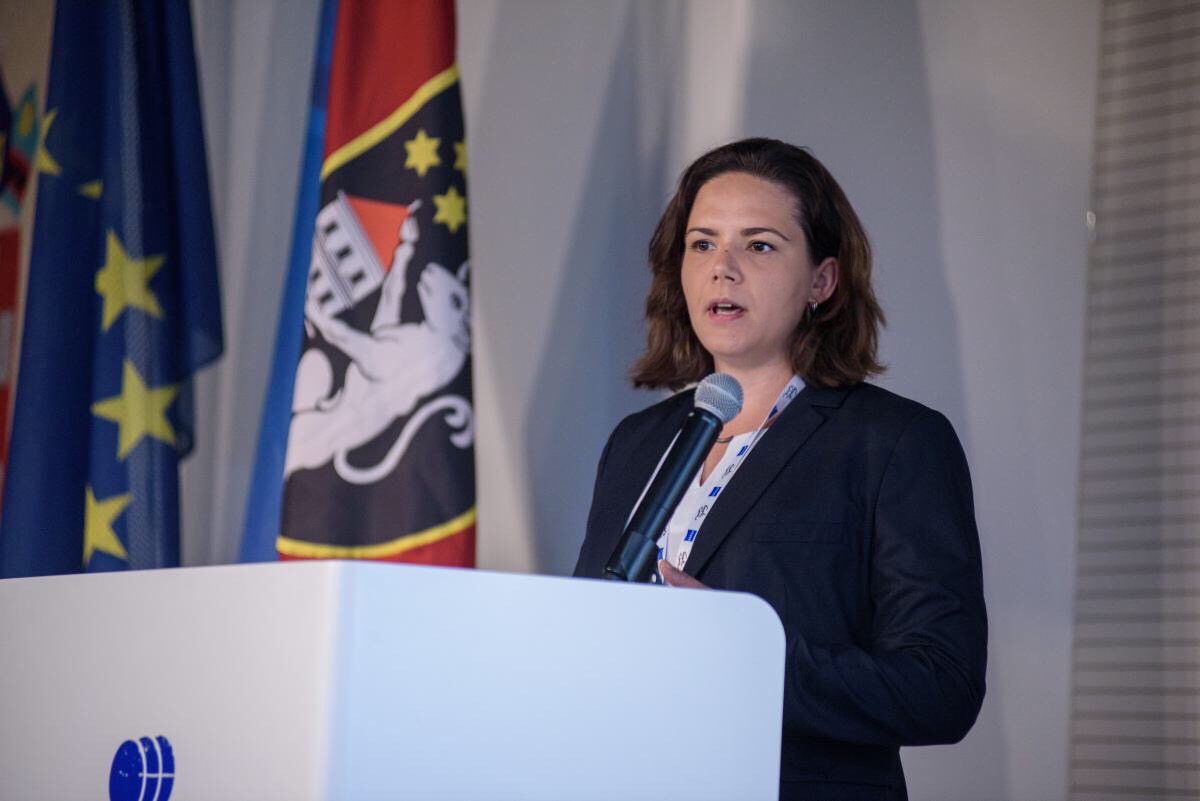
Dr Daniela Oehring and her research team specialise in understanding how eye movement and mechanical forces affect the development of myopia in children. Her work explores how changes in eye tissue could help explain why myopia develops and progresses.
Dr Daniela Oehring
Role: Associate Professor in Eye and Vision Science
Institution: University of Plymouth
Project name: Investigating the role of eye movement and mechanical stress in myopia progression
Project type: Seed Award
Project status: Completed
Myopia (shortsightedness) is a growing health issue, with more than one in three children impacted. It’s linked to serious conditions later in life, including retinal detachment and glaucoma, making it a major concern for researchers.
In most cases, myopia develops as the eye becomes elongated. This change in shape is associated with structural changes in the sclera the white outer layer of the eye which can weaken over time.
Dr Oehring’s research focuses on how mechanical forces, such as stretching and compression, affect cells within the sclera. She observed that children’s eyes tend to move more when they are outdoors compared to indoors, suggesting that reduced time spent outside may limit the natural range of eye movement and influence how the eye develops.
Her team is investigating how these forces affect communication between cells in the eye. By recreating these conditions in the lab, they aim to understand how scleral tissue responds to mechanical stress and whether this plays a role in myopia progression. Dr Oehring explains:
“If this trajectory continues, it will lead to huge numbers of young people having difficulties with vision, which we won’t be able to treat effectively.”
With funding from Sight Research UK, the team has been able to test these ideas in a controlled laboratory setting and gather high-quality data. Without this support, the team would not have been able to build the specialist testing systems needed or carry out the initial experiments required to move the research forward.
This work is still at an early stage, but the findings could lead to new ways not only to treat myopia, but also to prevent it from developing in the first place. Dr Oehring says:
“Our longer-term aim is to prove that if we apply stress in living tissue cells, they modulate their behaviour. If we can do that, it would be the first study ever to show that in eye tissue.”