

Seeing their future sooner: Transforming diagnosis for childhood glaucoma
Professor Mariya Moosajee and her research team at UCL Institute of Ophthalmology are working to find out the genetic causes of primary congenital glaucoma. Using advanced long-read genome sequencing, this project aims to improve diagnosis for young children impacted by this rare condition.
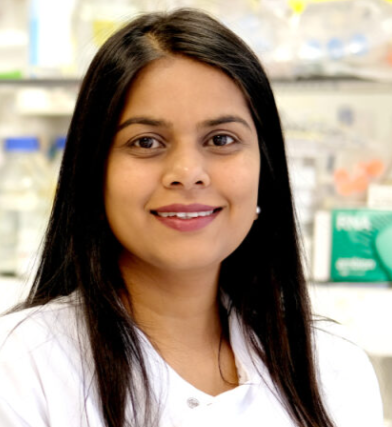
Professor Mariya Moosajee
Role: Professor of Molecular Ophthalmology
Institution: UCL Institute of Ophthalmology
Project name: Help for Little Eyes
Project type: Seed Award
Project status: Ongoing
Primary congenital glaucoma (PCG) is a rare but also serious eye condition that can develop in babies and young children. PCG causes increased pressure inside the eye and can lead to sight loss from a very young age we do know PCG has a genetic cause, however, we still do not understand the bigger picture, leaving many families are left without clear answers.
With funding from Sight Research UK, Professor Moosajee and her team are exploring a new approach using long-read whole genome sequencing, an advanced technology that can read much larger sections of DNA than traditional methods. By analysing genetic information in greater detail, this technique has the potential to uncover hidden mutations in genes that have not yet been linked to primary congenital glaucoma. Professor Moosajee says:
“For many families, not knowing the genetic cause of their child’s glaucoma can be incredibly difficult. By using new technologies, we hope to uncover answers that have so far remained hidden.”
If successful, this approach could significantly improve the number of children receiving a genetic diagnosis, helping families better understand their condition and access the support they need sooner. Earlier and more accurate diagnosis could also lead to more personalised care, improved monitoring, and better long-term outcomes for children affected by PCG. Professor Moosajee adds:
“Ultimately, this research is about giving families clarity, improving care, and laying the foundations for new treatments that could change the outlook for children with glaucoma.”