What is amblyopia?
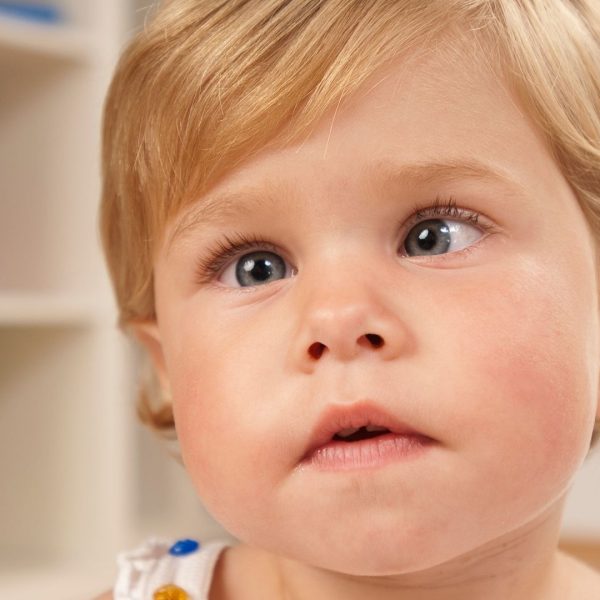
A lazy eye, also known as amblyopia, is a childhood condition1 that occurs when the vision in one eye does not develop properly. It is the most common eye disease in children occurring in about 1 in 50 children, due to the suppression of visual information passed between the eye and brain.
For children up to seven years of age it can normally be treated by patching the good eye and forcing the amblyopic eye to see. Much research is being done into the optimum time for patching and the difficulties involved.
1 in 50 children impacted
Amblyopia (or lazy eye), is the most common visual deficit in children, affecting around 2-5% of them in the UK. It can usually be corrected with eye patches, but becomes harder to correct as it advances.2
Causes of a lazy eye
Amblyopia occurs when normal visual development is disrupted in early childhood.3 The brain begins to favour one eye and suppress signals from the other. Common causes include:
- Refractive difference between the eyes: If one eye is significantly more long-sighted, short-sighted or astigmatic than the other, the brain may rely on the clearer eye and ignore the blurred image from the other.
- Eye misalignment (strabismus): When the eyes do not point in the same direction, the brain may suppress the image from one eye to avoid double vision.
- Vision deprivation: Anything that blocks light entering the eye during early development such as a cataract or drooping eyelid can prevent clear images from reaching the brain and interfere with normal visual development.
- Brain suppression: When the brain repeatedly receives a clearer image from one eye, it may begin to favour that eye and ignore signals from the other, which can lead to reduced vision in the affected eye.
How do I know if my child has a lazy eye?
Children with a lazy eye usually have problems accurately judging the distance between themselves and objects, which can make tasks such as catching a ball more difficult. In some cases you may notice that one eye looks different to the other(this could be due to a squint).4
Younger children are often unaware that there is anything wrong with their vision and if they are, they are usually unable to explain what is wrong. Older children may complain that they can’t see as well through one eye.
How is a lazy eye diagnosed?
Amblyopia is usually detected through routine eye examinations, often during childhood vision screening or visits to an optometrist.
Eye care professionals may check:
- Visual acuity (clarity of vision) in each eye
- Eye alignment and coordination
- Refractive error (whether glasses are needed)
- Eye health and development
Early diagnosis is important because treatment is most effective while the visual system is still developing.
When to seek medical advice
Many cases of lazy eye are diagnosed during routine eye tests before parents realise that there is a problem. Children are usually diagnosed with the condition around the age of three or four.
Children should have an eye test before they start school and then further tests at least every two years.
However, you should see your GP if you are concerned about your child’s eyesight as they can refer your child for further testing by an eye specialist (ophthalmologist).
Treatment for a lazy eye
Current treatments:
Although amblyopia cannot always be fully corrected, several treatments can help improve vision and encourage the brain to use the weaker eye. The best treatment approach depends on the cause and severity of the condition.
Treatments for Amblyopia include:
- Glasses: Corrective glasses may be prescribed to address focusing problems such as long-sightedness or astigmatism.
- Eye patching (occlusion therapy): A patch is worn over the stronger eye for several hours a day. This encourages the brain to use the weaker eye and strengthen visual development.
- Atropine eye drops: Drops may be used to temporarily blur vision in the stronger eye, helping the weaker eye to work harder.
- Treating underlying conditions: If amblyopia is caused by a squint or another eye condition, additional treatment such as surgery or specialist therapy may be needed.5 Treatment is most effective when started early, ideally before the age of seven, when the visual system is still developing.
Potential treatments:
At Sight Research UK, we are working tirelessly to find solutions to treat Amblyopia. Your eye specialist can let you know if there are any clinical trials you could participate in or you can find an active clinical trial here. To find out more about support for children’s eye health, you can find out here.
Saving sight through pioneering research
Resources
- Amblyopia and patching. The College of Optometrists.
- Lazy Eye. NHS England.
- Amblyopia (Lazy Eye) in Children. Cambridge University Hospitals.
- Amblyopia (lazy eye). Moorfields Eye Hospital.
- Amblyopia. National Center for Biotechnology Information.